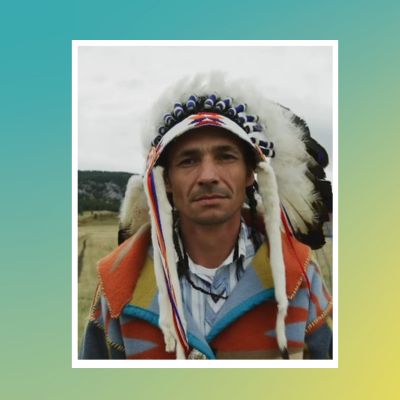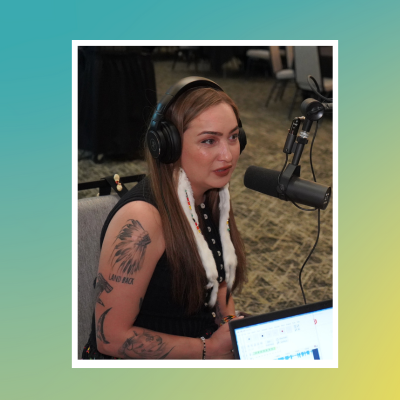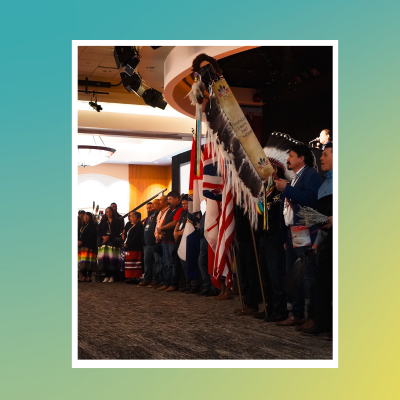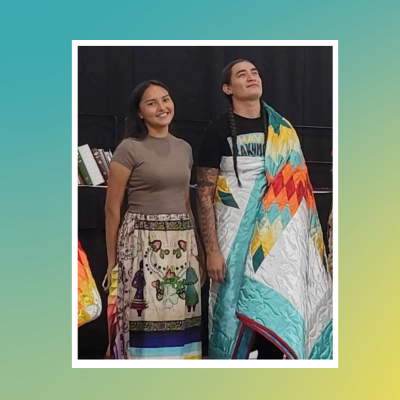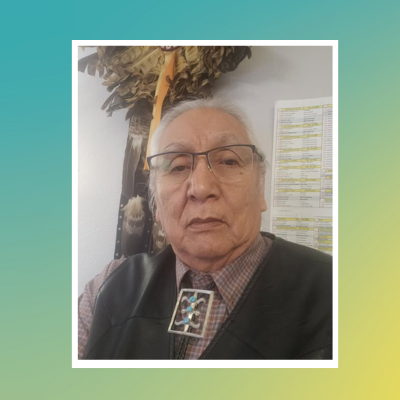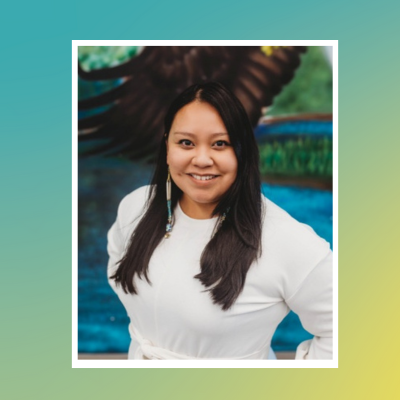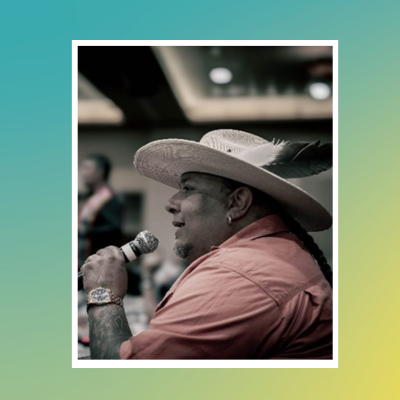

Kenneth (Tuffy) Helgeson
Air Date: February 8, 2026
Summary
Episode 12 - Interview with Kenneth Helgeson
SERIES
Iápi Wakán: Sacred Languages - Season 2
HOST & PRODUCER
Lindell Haywahe
Episode Guests
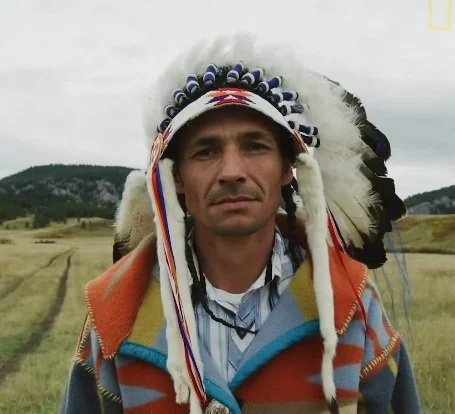
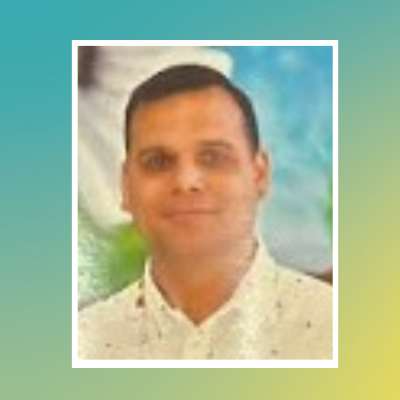
Kenneth Tuffy Helgeson is a Nakoda from Lodge Pole, Montana on the Fort Belknap Reservation. His family consists of his wife, Stevie, and their children: James, Celia, Tasaya and Tokana Ska. Tuffy is a language instructor at the Haya Lodge Pole High School and taught adjunct at the Aaniih Nakoda College as well. Tuffy was raised by his grandmother, Dora, who along with her many contemporaries, shared the language and culture with him. He began teaching at the age of 18, earning his Class 7 Teaching Endorsement.
Tuffy has always tried to maintain tribal connections and relationships with all the Nakoda speaking people in Alberta, Saskatchewan and Montana. In former times, Tuffy served as Grant Manager for the Fort Belknap NAEDC and assisted in the creation of Life’s Language Lodge, an immersion daycare.
For several years, he owned and managed a herd of cattle on the family ranch. An active member of the community, he made efforts to serve the powwow, rodeo and round dance circles as an announcer. He also served on the tribe’s economic development board for 5 years, one term on the local school board and is currently on the Assiniboine Treaty Committee.
Finally, Tuffy does not think of himself as a language keeper, but rather as a person who shares the language and culture for the next generation because the language is first in his heart.
More Episodes
Listen to Duane share what he learned from his Elders and relatives about the History of his people, the Oceti Sakowin through storytelling.
Learn about the Certificate in Indigenous Language Revitalization and how the University of Victoria works with community partners to deliver flexible community-based credit courses that help provide the foundational knowledge and skills for students to engage in, contribute to or initiate language revitalization initiatives in their homes, families, schools and communities.
Oswald McKay shares stories and lessons in English and his first-language, Dakota. He shares the pride of his first-language with listeners.
DECOLONIZING AND PROMOTING OUR OČÉTI ŠAKÓWĮ LIFEWAYS attention is devoted to promoting settler ways of living that highlight colonialist ideals. In hindsight, we are attracting, promoting, and internalizing traumatic dehumanizing discourse that impacts our nagi (spirit) furthering harm to our cultural and linguistic autonomy. Decolonization is often unpleasant, contradictory and questions our beliefs and experiences. Our language is foundational to our well-being as Dakota, Nakota and Lakota people. It is our protection and provides guidance but first we must allow ourselves to think “wakán ič’ina - deem oneself sacred” as intended ̨́ by our Creator-Great Spirit. This presentation is meant to identify common sense approaches through language that will allow change and revelation, embarking on a personal decolonization discourse. By looking inward, we begin to define and make connections to our Očéti Šakówį lifeways, and further the dialogue for ourselves.
Jim will share knowledge, stories and information that he collected throughout his life journey and experiences.
A recording of a speech given by Harold Blacksmith in both English and his first language, Dakota. He shares stories of his life, the lessons he has been taught and intends to carry onto others. Blacksmith also shares the importance language has in his own and his community’s lives, and future generations.
A collection of bonus interviews conducted and produced by Lindell Haywahe, Amanda Leader, and William Alexander Yuzicapi. Our producers interviewed a variety of individuals so they could share their life journeys as fluent and student speakers of their languages.
Vanessa Goodthunder's presentation focused on the Dakota language and Wicohan (Way of Life) that is taught to children from birth to five-years-old. Her goal is to expand this program to older children. She says the five-year-olds will be co-teachers in the advanced program.
In his presentation, Arvol Looking Horse talks about the importance of World Peace and Prayer Day--June 21, and his life journey that brought him to the Oceti Sakowin conference.


Interview with Tommy Christian